
A winter power cut rarely feels like a question of watts and watt-hours. It becomes immediate when the broadband router drops, the boiler controls go dark, the fridge begins warming and mobile phones are running low. Effective power cut preparation starts with those household consequences, not with a particular generator or battery.
The right plan depends on what you need to keep running, how long outages tend to last where you live and what you can operate safely. A flat with occasional short interruptions needs a different answer from a rural home exposed to multi-day faults. Start with the problem. Then choose the technology.
Start power cut preparation with essential loads
Most homes cannot, and usually do not need to, back up everything. Electric showers, ovens, immersion heaters, tumble dryers and electric space heaters consume a great deal of power. Trying to run them makes a backup system larger, more costly and harder to use.
Instead, write down the appliances that change an outage from inconvenient to disruptive. For many UK households, that means the router, a few lights, mobile phone charging, refrigeration, a laptop and the electrical controls for a gas or oil boiler. A gas boiler still normally needs electricity for its pump, fan and controls, so it will not provide heating during a cut unless those electrical loads are backed up.
Consider your own circumstances. A household with a medical device, a sump pump, an electric gate, a private water pump, an aquarium or people working from home may have different priorities. Do not assume the appliance with the highest wattage is the most important one. A modest router can matter more than a high-power kitchen appliance if it keeps communication, work and emergency information available.
For each essential item, note its running power in watts, how many hours it needs to operate, and whether it has a higher starting surge. Fridges and pumps are common examples: their compressor or motor can draw substantially more power briefly when starting than while running. Your backup inverter must handle both the continuous load and that momentary demand.
Separate power from energy
Two figures determine whether a backup option will work: output power and stored or available energy.
Output power, measured in watts or kilowatts, tells you what can run at the same time. A 1 kW power station may comfortably run a router, lighting, laptops and a modern fridge, but it may not start every appliance you add to it. Energy capacity, normally measured in kilowatt-hours (kWh), tells you how long the load can run.
A simple estimate is:
Runtime in hours = usable battery capacity in kWh ÷ average load in kW
If your essential loads average 250 watts, or 0.25 kW, a battery with 1.5 kWh of usable energy could theoretically last six hours. In practice, allow some margin for inverter losses, appliance cycling and colder conditions. A fridge does not draw its rated power continuously, but opening its door frequently or placing it in a warm kitchen changes the result.
This is also why advertised battery capacity is not the whole story. Check usable capacity, inverter output, surge capability and the number of sockets or circuits that can actually be supplied. For generators, consider rated continuous output rather than only a headline maximum figure.
Choose runtime before choosing equipment
Think in outage bands rather than one imagined emergency. A short interruption of one to four hours may only require charged phones, torches and a compact portable power station. An overnight cut puts refrigeration, heating controls and sleeping arrangements into the picture. A multi-day event raises questions about refuelling, recharging, food, hot water and safe operation.
Portable power stations are quiet, can be used indoors when operated according to their instructions and require little day-to-day maintenance. They are often a sensible first step for modest essential loads. Their limitation is finite stored energy. A larger battery can extend runtime, but it will eventually need charging from the grid, solar panels, a vehicle where supported, or a generator.
A portable generator can offer long runtime if you have fuel and can refuel safely, making it more suitable for extended outages or higher loads. The trade-offs are noise, exhaust emissions, servicing, fuel storage and placement. It must operate outdoors in an open, well-ventilated location, well away from doors, windows and vents. Never run a generator in a garage, shed, carport or enclosed area, even with doors open.
A fixed home battery with automatic backup can provide a more integrated response, particularly where cuts are frequent and the household also wants to store solar generation or shift electricity use. However, not every home battery provides backup during an outage. Some stop supplying power when the grid fails unless they have the required backup hardware, isolation equipment and installation design. Ask what circuits are backed up, whether changeover is automatic, and how much power is available in island mode.
Plan the home, not just the power source
A battery or generator is only useful if the appliances can be connected safely. For a basic arrangement, extension leads can supply selected devices such as a router, lamps and chargers. Keep leads tidy, avoid overloading multi-way adaptors and do not route cables where they can be trapped in doors or become a trip hazard.
For boiler controls, refrigeration or chosen socket circuits, a qualified electrician may be able to design a dedicated changeover arrangement. This isolates your home from the public network during an outage. It is essential: never attempt to power house circuits by plugging a generator into a wall socket. That dangerous practice can energise external lines and put neighbours, network workers and your own equipment at risk.
The practical location matters too. A portable battery needs an accessible, dry place and a habit of being kept charged. A generator needs secure outdoor storage, a safe running position, suitable weather protection that does not restrict ventilation, and an achievable fuel plan. If the only usable generator location is close to a neighbour’s bedroom window, noise and fumes may rule it out.
Build a low-cost resilience layer first
Backup electricity is only one part of preparedness. Small, ordinary measures reduce the pressure on it. Keep torches in known locations and use rechargeable lights or lanterns rather than relying on candles. Maintain charged power banks for mobile phones, and save key contact numbers somewhere available without broadband.
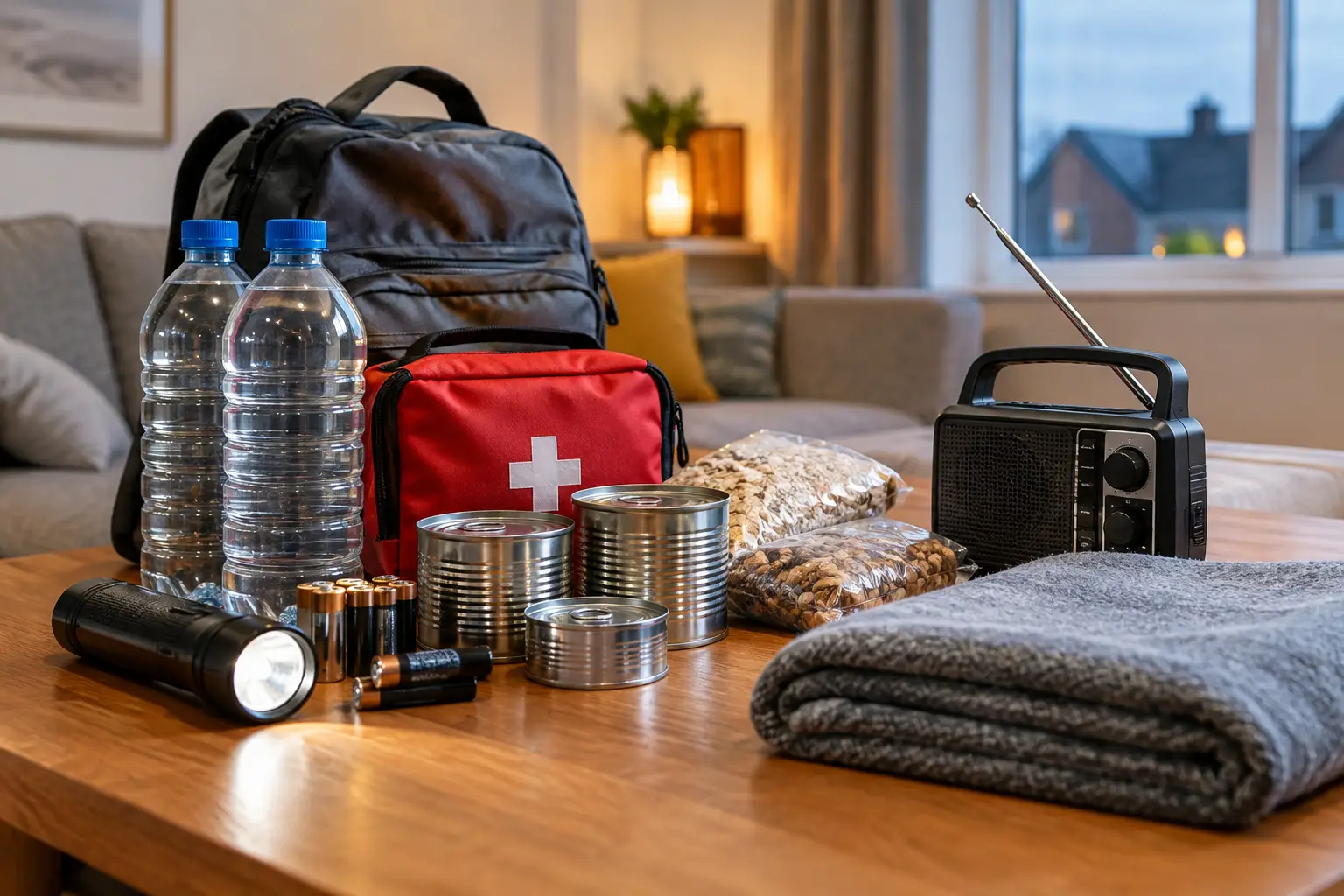
A sensible household kit includes:
- torches or lanterns, spare batteries and a battery radio;
- charged power banks and charging cables;
- a manual can opener, drinking water and easy-to-prepare food;
- a thermometer for checking refrigerated food if an outage lasts;
- blankets, warm clothing and any necessary medication arrangements.
For food safety, keep fridge and freezer doors closed as much as possible. A closed fridge generally keeps food cold for around four hours, while a full freezer can retain temperature for much longer than a half-full one. Actual safety depends on temperature and duration, so a fridge thermometer gives better information than guesswork.
If you depend on electrically powered medical equipment, contact the equipment provider or relevant healthcare team well before an outage. A consumer backup setup may not be appropriate for life-critical needs, and a specific contingency plan is required.
Test the plan while the lights are on
The most common failure is not choosing the wrong technology. It is discovering during a real cut that the battery was empty, the generator will not start, the fridge plug cannot reach, or the boiler will not restart as expected.
Every few months, run a planned test. Charge the backup source, connect the intended loads and check actual power draw and runtime. Test at a realistic time, perhaps in the evening when lights, internet and heating controls are in use. For a generator, follow its maintenance schedule, rotate stored fuel appropriately and check oil, starting method and safe outdoor setup.
Review the plan after each real outage. If your household only needed connectivity and lighting, a large system may be unnecessary. If the outage exposed a reliance on a pump, heating controls or remote work equipment, revise the essential-load list before spending more.
Match the investment to the disruption
There is no single correct level of preparation. A few hundred pounds spent on lighting, charging and a small battery can make short cuts far easier. A professionally installed battery, solar and backup system may suit a household seeking regular resilience and wider energy benefits. A generator may remain the practical choice where outages are lengthy, loads are larger and outdoor operation is realistic.
Treat claimed runtime with caution, especially where it assumes a very small load. Calculate from your own appliances, leave headroom for starting surges, and include the cost and effort of keeping the system ready. The best setup is not the biggest one on paper. It is the one your household can safely operate, maintain and rely on when the mains supply is unavailable.
A power cut is a poor time to learn what matters most in your home. A short test, a written essential-load list and one proportionate backup option can turn the next outage into a manageable interruption rather than a scramble.